
Furnace Not Turning On? Safe Checks Before Calling an HVAC Technician
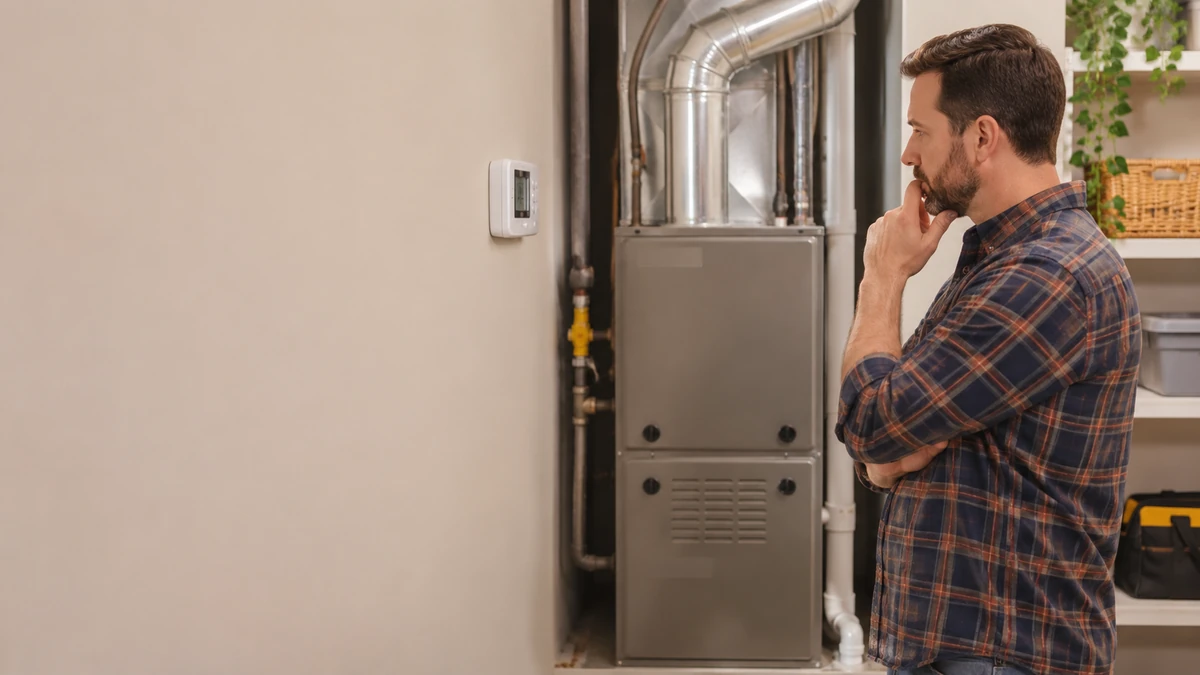
Is your furnace not turning on? Before arranging service, work through a few safe, simple checks that may help identify a thermostat, power or airflow issue. Learn what you can inspect at home—and when to stop and call an HVAC technician.
A furnace that will not start can make a Birmingham home uncomfortable quickly. The cause may be something straightforward, such as a thermostat set incorrectly or a furnace power switch that has been turned off. Other problems involve electrical controls, ignition, gas supply or safety devices and need professional diagnosis. This guide explains how to check a few accessible items without opening the furnace cabinet or attempting a repair that could put you at risk.
If you smell gas or hear gas escaping, leave the home immediately. Do not operate lights, switches, appliances or phones inside. Once outside, contact your gas utility or emergency services. If a carbon monoxide alarm sounds, move everyone into fresh air and call 911. Do not re-enter until responders say it is safe, and do not use the furnace again until it has been checked by qualified personnel.
Quick Checks When Your Furnace Won’t Turn On
Before you begin, make sure there is no smell of gas, carbon monoxide alarm, smoke, sparking, burning electrical odour, visible water around electrical equipment or other immediate hazard. If any of these are present, stop and follow the safety guidance above. Otherwise, use this quick checklist as a starting point.
1. Check the Thermostat Settings
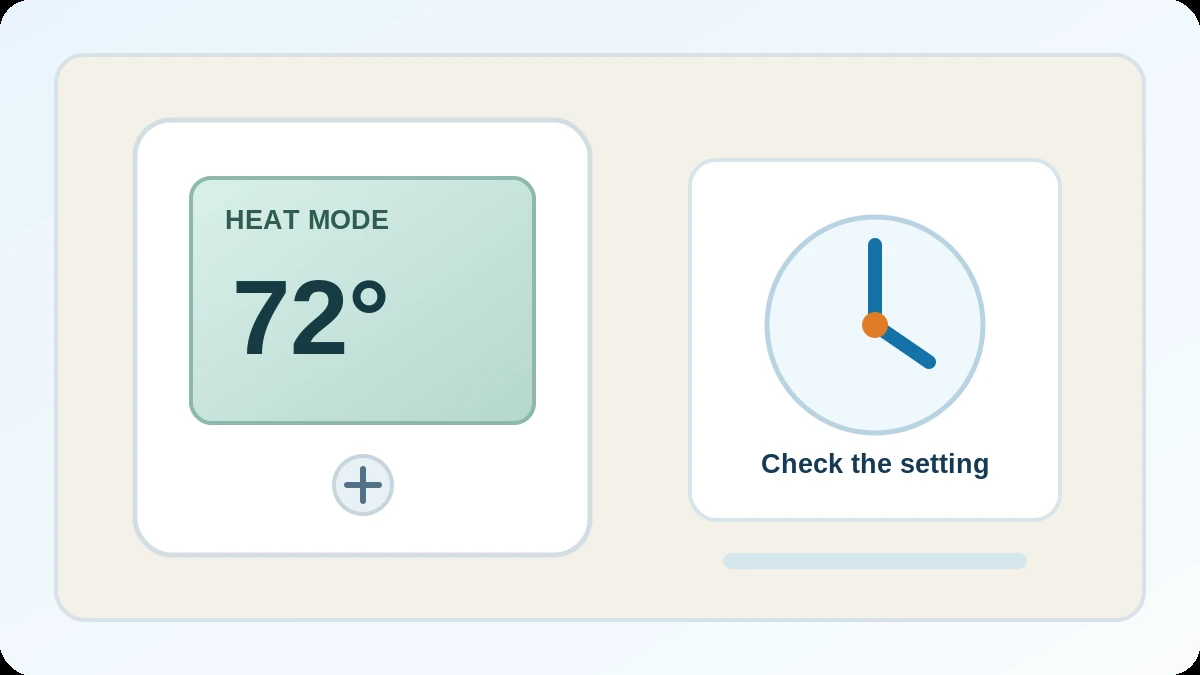
The thermostat tells the heating system when the home needs heat. If it is set to COOL, OFF, or a schedule that lowers the temperature, the furnace may not receive a call for heat. Start with these simple checks:
- Select HEAT: Confirm the system mode is set to HEAT, not COOL or OFF.
- Raise the set temperature: Set it a few degrees above the current indoor temperature so the thermostat is clearly requesting heat.
- Review the schedule: Check for a temporary hold, vacation setting, sleep schedule or energy-saving mode that may have changed the target temperature.
- Check the display and batteries: If the screen is blank or dim and your thermostat uses replaceable batteries, replace them according to its manual.
If the display remains blank, the thermostat is hard-wired, or the furnace still does not respond, do not remove the thermostat or touch its wiring. A technician can test its power, settings and control signal.
2. Check the Furnace Power Switch
A gas furnace still needs electricity to operate its controls, blower and electronic ignition. Many installations have a nearby service switch that looks like an ordinary light switch. It may be on a nearby wall or on the side of the furnace.
If the switch is easy to identify, dry, undamaged and safe to reach, visually check whether it is in the ON position. If it is OFF and there are no signs of gas, smoke, burning, water or electrical damage, you can return the accessible switch to ON. Do not remove its cover, touch wiring or open the furnace cabinet. If the switch trips, feels hot, buzzes or appears damaged, leave it alone and call a professional.
3. Look for a Tripped Circuit Breaker
The furnace may have a dedicated breaker labelled Furnace, Heating or HVAC. From the outside of a dry, undamaged electrical panel, check whether the labelled breaker appears tripped or is not in its normal ON position.
Do not repeatedly flip a tripped breaker back on. A breaker can trip because of an electrical fault or an equipment problem. Follow the furnace and electrical-panel instructions; when the cause is unclear, leave the breaker as it is and contact a qualified HVAC technician or electrician. Never touch a wet, hot, buzzing or visibly damaged panel.
If the breaker trips again after any manufacturer-approved reset, stop there. Repeated resets are not a repair and can make an electrical problem more dangerous.
4. Inspect the Air Filter
A heavily clogged filter restricts airflow. On some systems, reduced airflow can contribute to overheating and a safety shutdown, so a dirty filter is worth checking. It is not proof that the filter is the reason a completely silent furnace will not start.
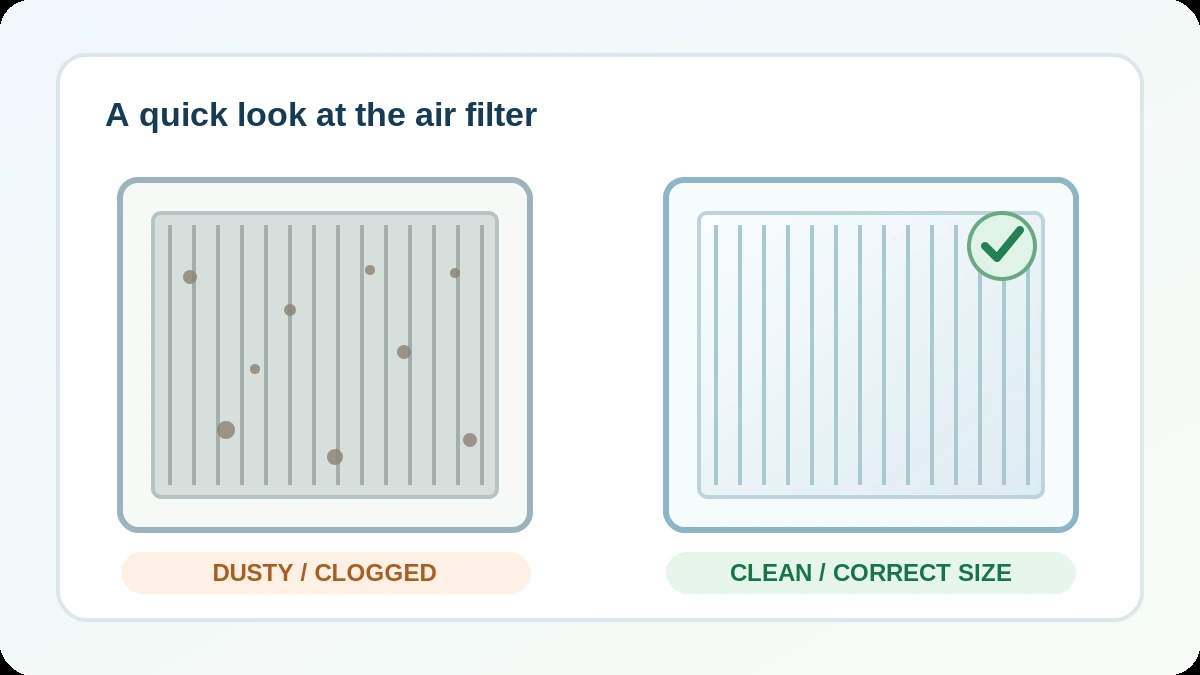
If the filter is in a normal, homeowner-accessible slot or grille, check it according to the equipment instructions. Replace a dirty disposable filter with the correct size and type, and point the airflow arrow in the direction shown on the equipment or filter housing. Do not run the furnace without a filter. If accessing the filter would require removing internal panels, leave the job to a technician.
5. Make Sure the Furnace Access Door Is Seated
Many furnaces include a safety interlock that prevents operation when an access panel is not correctly in place. Without removing anything, look at the outside of the unit and see whether the normal front panel appears aligned and closed.
Do not remove the panel to reach the switch, hold the switch in, tape it down or bypass it. If the door is damaged, will not sit correctly, or the furnace only works when the panel is pressed, stop and arrange service.
6. Check Supply Vents and Return Grilles
Walk through the rooms and make sure supply registers and return-air grilles are not blocked by rugs, furniture, curtains or stored items. This is a simple housekeeping check, not a repair for a furnace that has an electrical, ignition or control fault. If airflow remains weak or the system repeatedly shuts down, tell the technician what you noticed.
7. Note Any Sounds or Visible Error Indicators
Pay attention to what happens when the thermostat calls for heat. Does the furnace remain completely silent? Do you hear a click, a brief fan sound or repeated starting attempts? Does the thermostat show an error message? Some models have a diagnostic light visible through an existing viewing window.
Write down the message or visible flash pattern only if it can be observed without removing a panel. Diagnostic codes vary by manufacturer and model, so share the information with the technician rather than trying to repair the indicated component yourself.
Why a Furnace May Still Not Start
If the basic checks do not help, the cause may be inside the equipment or in a safety control. These are common areas a technician may need to inspect:
These are not do-it-yourself repair instructions. Do not clean or replace a flame sensor, handle an ignitor, adjust a gas valve, open a burner compartment, test live wiring or bypass a limit, pressure or door switch. The correct diagnostic steps depend on the furnace model.
What If the Blower Runs but the Furnace Does Not Produce Heat?
A blower that runs without warm air is a different symptom from a furnace that does not start at all. The system may be moving air while the heating sequence is failing, or the thermostat and fan settings may be involved. Do not assume the cause is the same as a completely silent furnace. Share the exact symptom with a technician so the system can be diagnosed correctly.
When Should You Call an HVAC Technician?
Contact a qualified HVAC technician if the furnace still will not turn on after the safe checks, or if any of the following occurs:
- The labelled furnace breaker is tripped or trips again.
- The power switch, wiring or electrical panel looks damaged, hot or wet.
- The furnace repeatedly clicks, starts and stops, or displays an unfamiliar fault code.
- You suspect an ignition, flame-sensing, pressure-switch, gas-supply or control-board problem.
- The access panel is damaged or the furnace appears to operate only when it is pressed.
- You notice smoke, sparks, burning electrical odours or water near electrical components.
For a gas smell or a carbon monoxide alarm, do not wait for a routine service visit: leave the home and contact the appropriate emergency or utility service from a safe location.
What to Tell the HVAC Technician
Frequently Asked Questions
Why is my furnace not turning on at all?
Common possibilities include thermostat settings or batteries, an interrupted power supply, a tripped breaker, a dirty filter that contributed to a safety shutdown, or an internal control or ignition fault. Start with the safe, accessible checks and arrange service if the furnace remains unresponsive.
Why is my furnace not kicking on when the thermostat is set to heat?
Confirm the thermostat is set to HEAT and its target temperature is above the current room temperature. If the display is blank or the furnace does not respond, the problem may involve thermostat power, the furnace power supply or an equipment control.
Can a dirty air filter stop a furnace from turning on?
A severely clogged filter can restrict airflow and contribute to overheating or a safety shutdown on some systems. Check the accessible filter and replace it with the correct type if it is dirty, but do not assume it is the only possible cause.
Should I reset my furnace if it will not start?
Do not repeatedly power-cycle the furnace or reset a breaker that keeps tripping. Reset procedures differ by model. Follow the owner’s manual only when it clearly describes a homeowner reset; otherwise leave the equipment alone and ask a qualified technician.
Why does my furnace click but not turn on?
Clicking may be part of a startup attempt, but an ignition, gas-supply, pressure-switch or control issue can prevent the furnace from completing the sequence. Do not open the burner compartment or attempt to repair ignition components.
Is it safe to check my furnace myself?
You can check accessible thermostat settings, an undamaged external power switch, an unobstructed vent and a homeowner-accessible filter. Do not open electrical or burner compartments, touch wiring, adjust gas components or bypass safety switches.
When should I call an HVAC technician?
Call when the furnace remains off after basic checks, a breaker trips, an error indicator appears, the system makes unusual repeated sounds, or you suspect an internal electrical, ignition or gas issue. Gas odours and carbon monoxide alarms require immediate evacuation and emergency or utility assistance.
Furnace Still Not Turning On?
If the safe checks have not solved the problem, contact Heat & Air Birmingham to discuss your heating issue and next steps. Share what you observed so the service provider can confirm diagnosis, coverage, availability and timing. Learn more about our heating and furnace repair in Birmingham.
Service availability, diagnosis, pricing and appointment timing must be confirmed by the provider.Further Reading: For additional manufacturer guidance, see the Carrier furnace troubleshooting guide and Trane gas furnace troubleshooting guidance. For carbon monoxide safety, review the U.S. Consumer Product Safety Commission fact sheet. Always follow the instructions for your specific furnace model.